Quick Answer
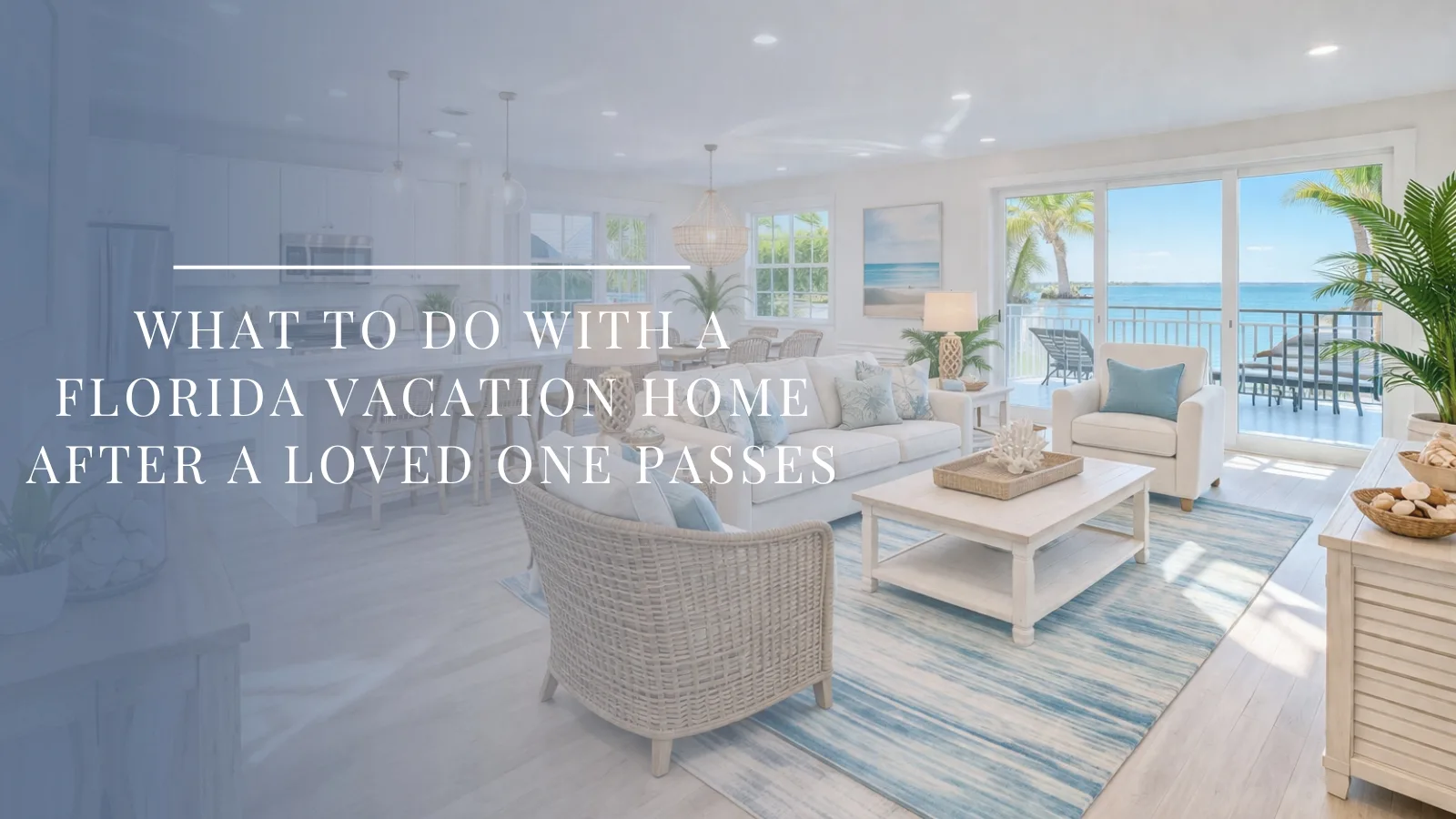
If you inherit a Florida vacation home after a loved one passes, you typically have three options: keep the property, rent it, or sell it. Before making a decision, you may need to go through probate, understand potential tax implications, and determine whether maintaining the home—especially from out of state—is practical.
What Happens to a Florida Vacation Home After a Death?
When a loved one passes away, their vacation home doesn’t always transfer immediately to heirs. In many cases, the property must go through probate before it can be legally sold or transferred.
This process can take time and may involve multiple steps, especially if there are several heirs or the estate is not clearly structured. During this period, the home still needs to be maintained, insured, and secured.
For many families—particularly those who live out of state—the vacation home can quickly become a logistical responsibility rather than a simple asset.
Your Options for a Florida Vacation Home
Once you’re legally able to make decisions about the property, you generally have three options:
1. Keep the Home
You may decide to keep the vacation home for personal use or as a long-term investment. This is often appealing when the property has sentimental value or has been in the family for years.
However, owning a second home in Florida—especially from another state—can involve more responsibility than expected.
Ongoing costs may include:
- Property taxes
- Insurance (which may be higher for seasonal or vacant homes)
- Routine maintenance and repairs
- HOA or community fees
Home Watch Services and Vacant Home Risks
If the home will sit vacant for extended periods, it’s important to have a plan in place to monitor and maintain the property.
In Florida, high humidity, storms, and pest activity can lead to issues like mold, leaks, or damage going unnoticed. In some cases, insurance policies may require regular property checks to maintain coverage.
Many out-of-state owners use home watch services to:
- Perform routine inspections
- Check for water intrusion or HVAC issues
- Coordinate minor maintenance
- Ensure the home remains in good condition between visits
Without a system in place, a vacant home can deteriorate quickly, especially in Florida’s climate. Managing a vacant property during probate requires consistent oversight to avoid costly surprises.
For many families, the long-term maintenance and coordination required—especially from out of state—ultimately plays a major role in the decision to keep or sell the property.
2. Rent the Property
Some heirs consider renting the home to offset ongoing costs. While this can provide income, it also introduces additional responsibilities.
Managing a rental property often involves:
- Coordinating tenants or short-term guests
- Handling maintenance requests
- Managing turnovers and cleaning
- Staying compliant with local rental regulations
For owners who live out of state, managing a rental remotely can quickly become overwhelming without local support.
3. Sell the Vacation Home
Selling is often the most practical option—especially if:
- You don’t live nearby
- The home needs updates or repairs
- Multiple heirs are involved
- You want to avoid ongoing expenses
Selling a Florida property from out of state can be done without traveling, as long as the right systems are in place to handle coordination, access, and closing logistics.
For many families, selling provides a clean resolution and allows them to move forward without the ongoing burden of managing the property.
Do You Have to Go Through Probate?
Whether probate is required depends on how the property was titled.
In Florida, probate is often necessary unless the home was held in a trust, owned jointly with rights of survivorship, or structured with certain estate planning tools.
If probate is required, it can impact both the timeline and your ability to sell the home right away. Understanding whether an inherited house must go through probate in Florida is an important first step before making any decisions.
Tax Considerations When Selling a Vacation Home
One of the most common concerns is whether taxes will be owed when selling the property.
In many cases, inherited property benefits from a step-up in basis, which can significantly reduce capital gains taxes when the home is sold.
Understanding capital gains on inherited property in Florida can help you estimate potential tax exposure and make a more informed decision about whether to sell.
Common Challenges With Vacation Homes
Vacation homes often come with unique challenges that primary residences don’t:
- Deferred maintenance from seasonal use
- Increased exposure to storms and humidity
- Insurance considerations for vacant or second homes
- Furnishings and personal belongings to sort through
- Coordinating vendors from out of state
These factors can make the process feel overwhelming—especially during an already difficult time.
How to Simplify the Process
If you’re dealing with a Florida vacation home after a loved one passes, having someone local can make a significant difference.
Instead of trying to coordinate everything remotely, many families choose to work with a team that can:
- Manage cleanouts and personal property
- Coordinate repairs and maintenance
- Prepare the home for sale
- Oversee the process from start to finish
Final Thoughts
A Florida vacation home can feel like both a meaningful asset and a complicated responsibility after a loss. Taking the time to understand your options—and having the right support in place—can help you make a decision that’s right for your situation.
If you’re dealing with an inherited home and aren’t sure what to do next,
we can help you understand your options and handle everything from start to finish.
Whether you’re local or out of state, we coordinate the entire process so you don’t have to.
We Help Out-of-State
Owners Handle Everything

Nicole Murphy is a real estate advisor and founder of SWFL Estate Solutions, helping families across Southwest Florida navigate inherited property, probate real estate, and estate transitions.